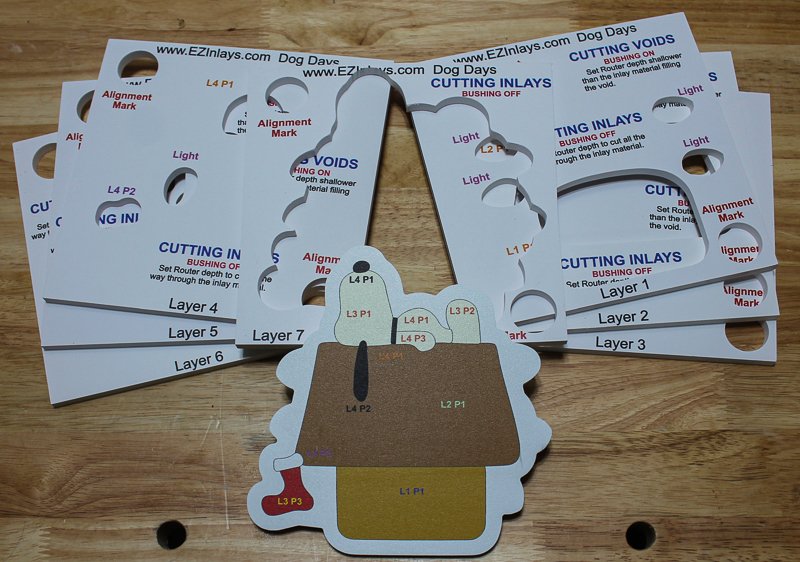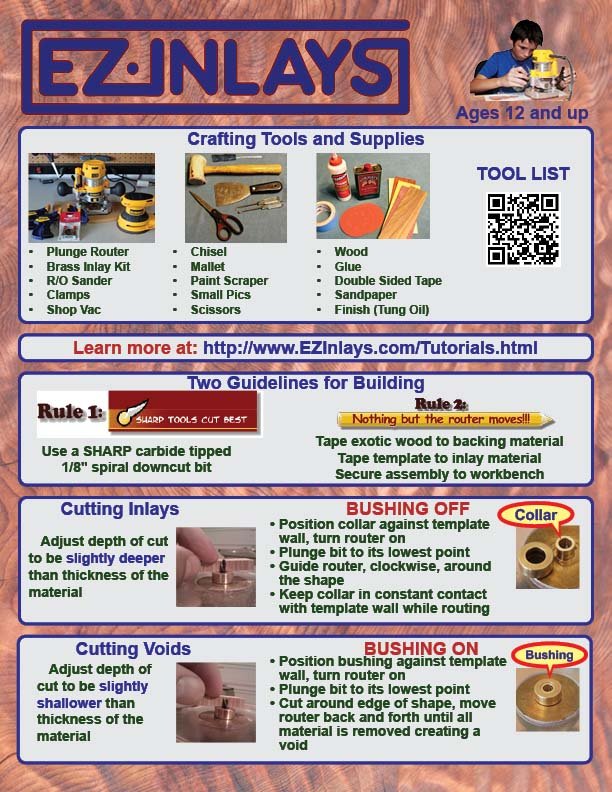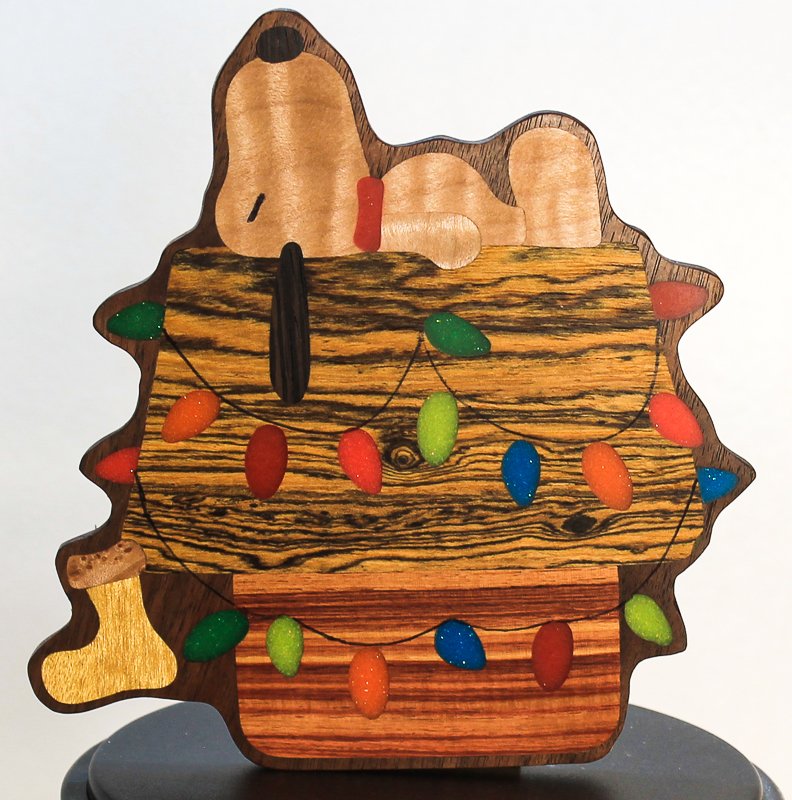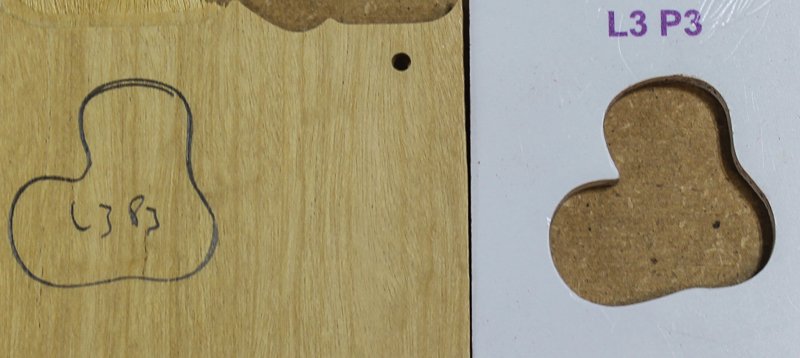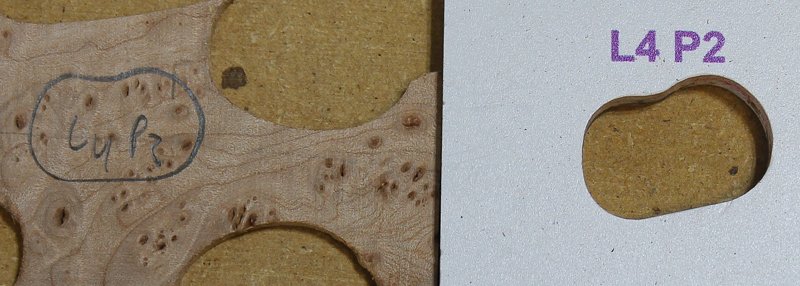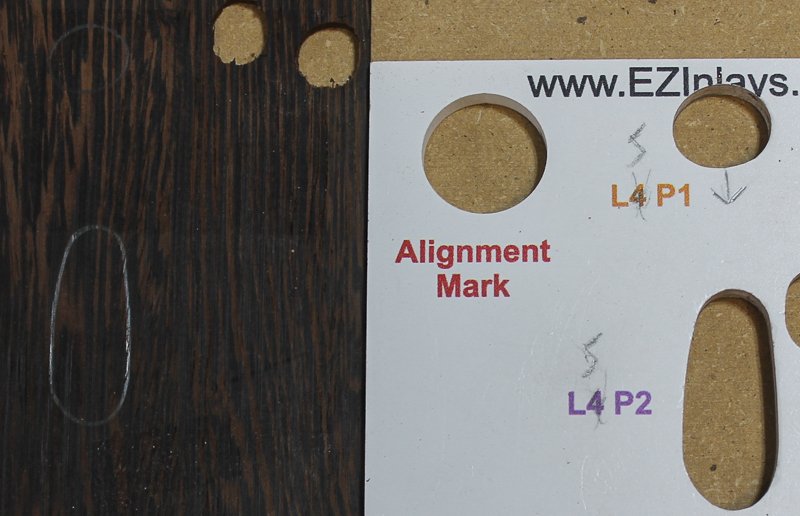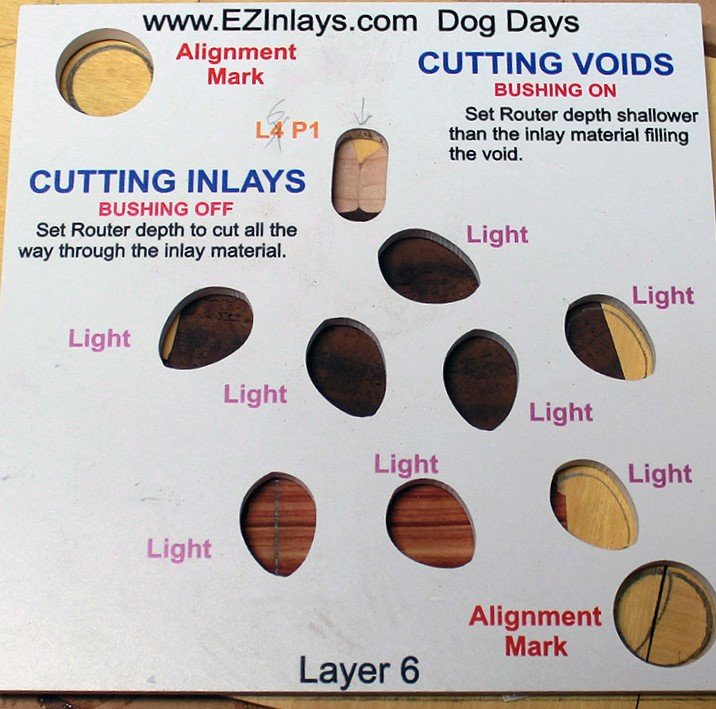
Best of all you don't need to be a master crafts-person, much less a woodworker, to build this ornament. All you need is a few basic tools that are inexpensive as well as safe and easy to use. Click here review the Router Based Inlay Tool List.
Never built an inlay before? Click here to Learn How To Build Any Wood Inlay.
Click twice to play
This video explains the process used to select the inlay materials for this build of the decorative inlay Dog Daze Christmas Ornament.
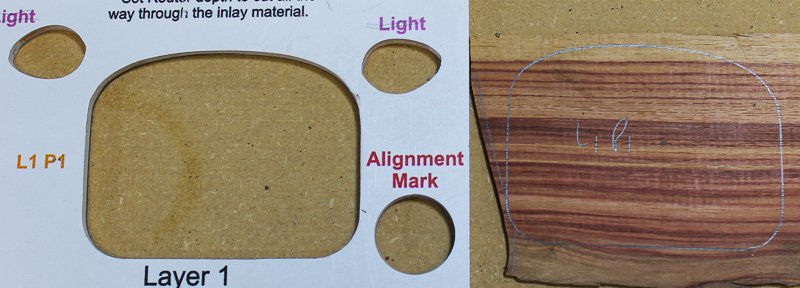
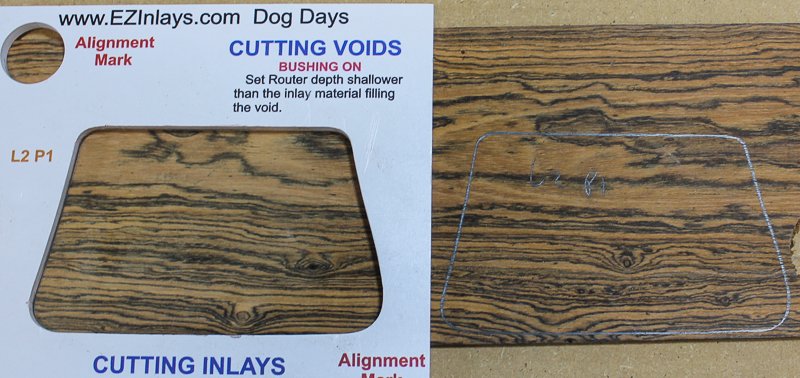
When selecting the inlay materials for Dog Daze you'll want to focus on contrast between the dog, his house, and the background material.
This design was created to honor childhood memories of the Charllie Brown Christmas special. Childhood memories are just the best! :)
INLAY MATERIALS THIS BUILD
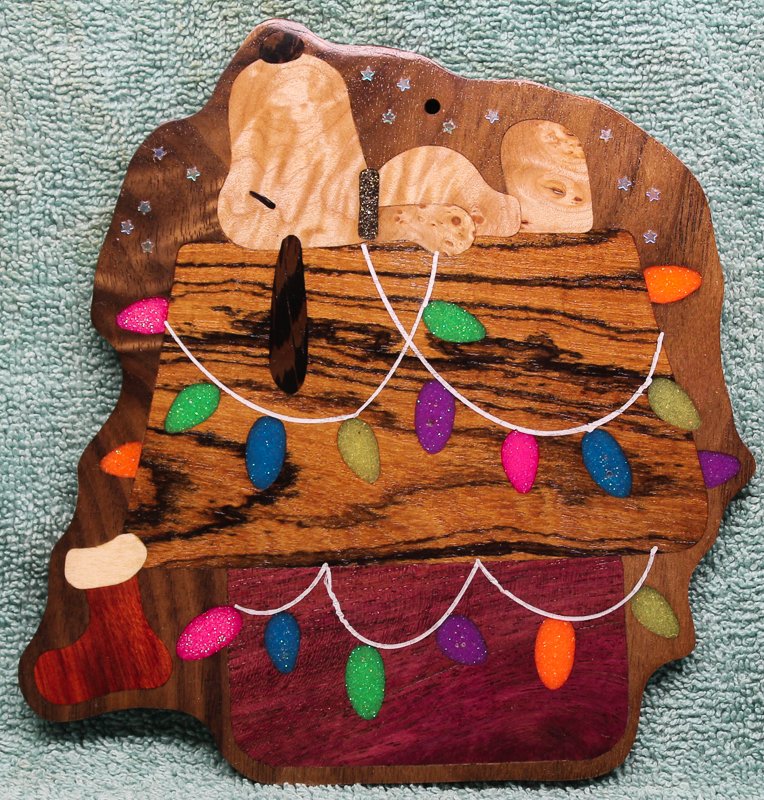
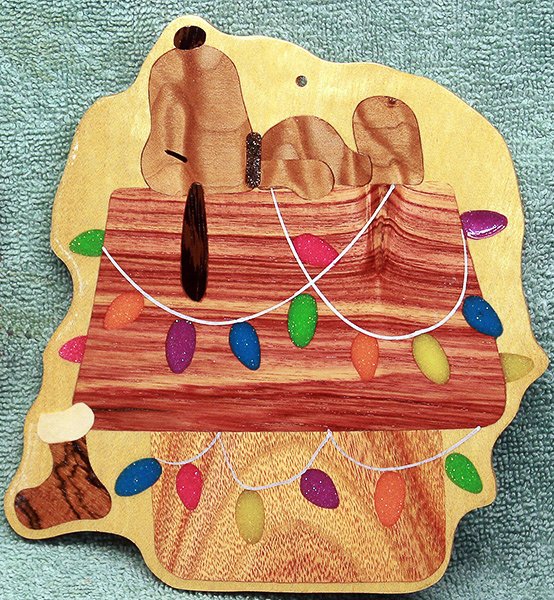
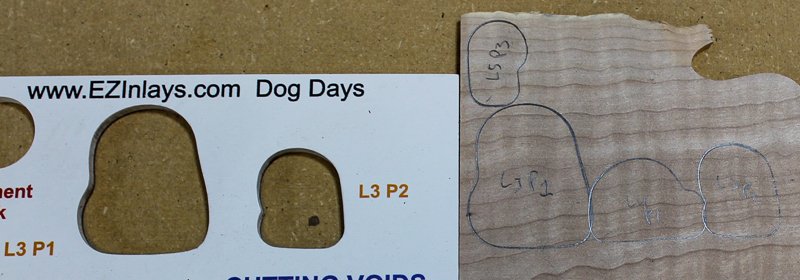
* Walnut 7" x 7" x 5/8" - Base materialWhen selecting the pieces for the dog try to get the grain patterns between the head, body, and feet aligned. Then for the arm use the same color wood but have the grain direction different than the rest of the dogs body.
You get to decide what type of material to use for the dogs . Personally I recommend using epoxy and glitter because you can make a "sparkley" for the dog. Dogs love bling! :)
For the roof a horizontal grain patterns seems to provide better contrast between the dog and the roof than a vertical one does.
Click twice to play
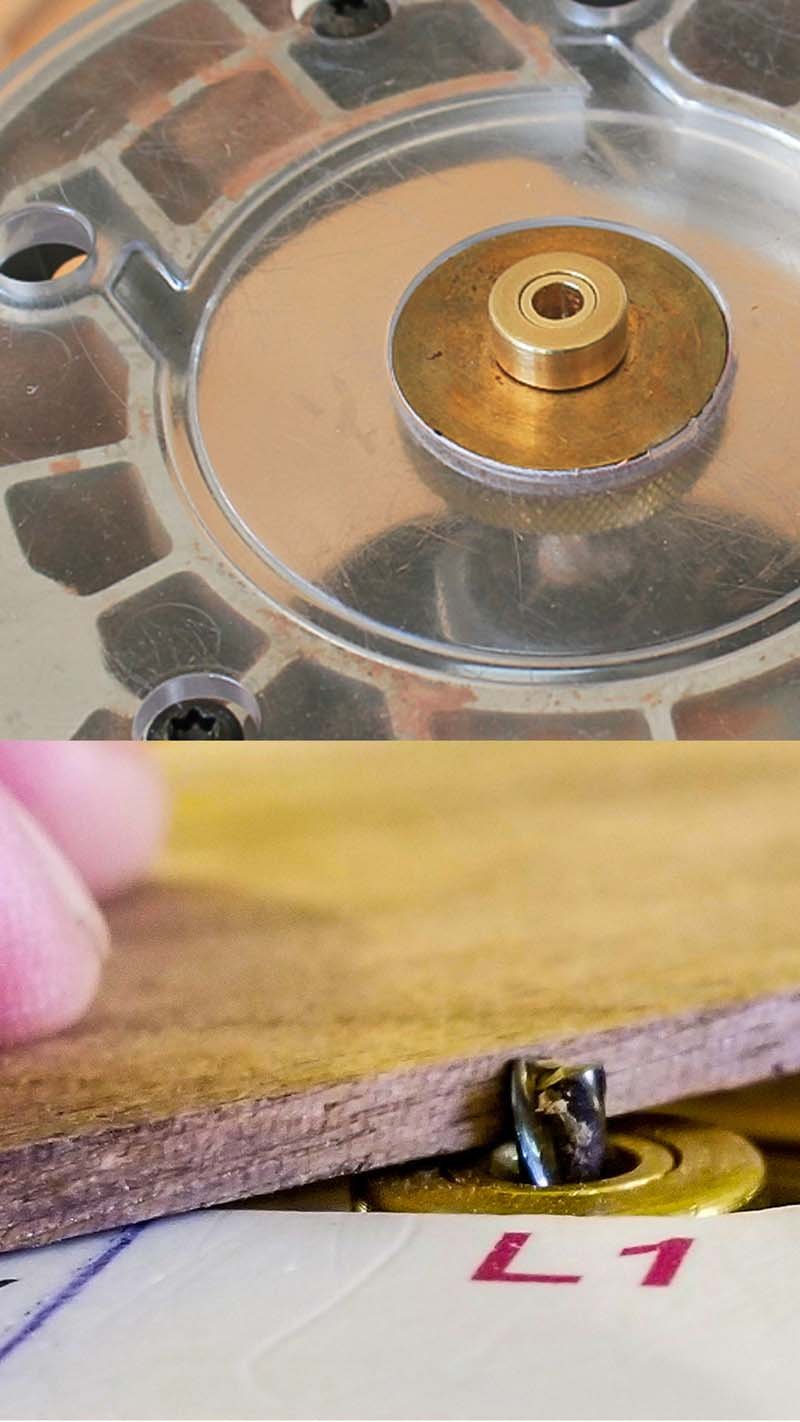
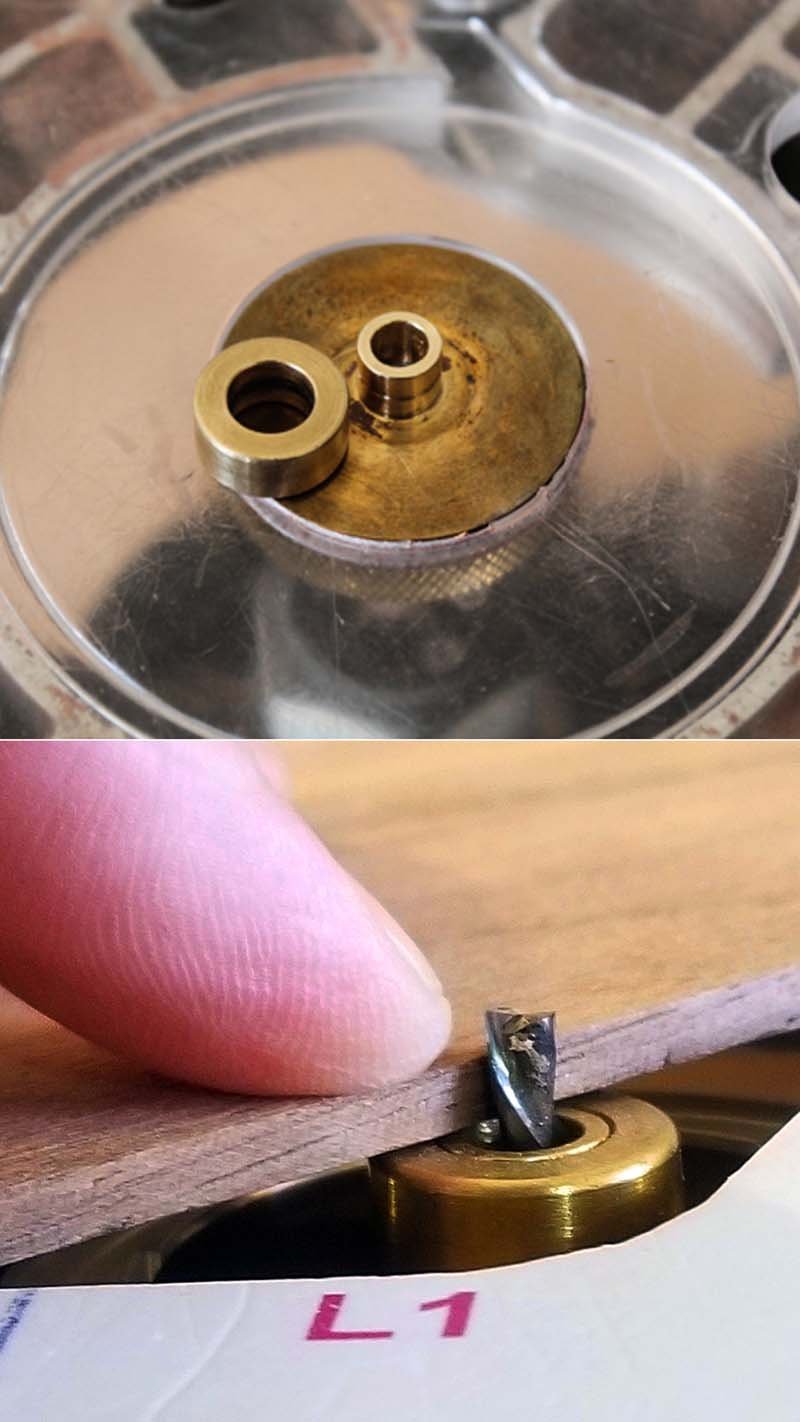
Prior to filming the video I had prepared the router by taking the bushing off and set the depth of plunge to cut all the way through the base material. I also positioned the template, using the alignment marks built into the template, and securely fastened it to the base material using double sided tape.
To cut out the ornament three passes were used with a little cleaning out of dust and debris before the final pass was made. After I was sure I had cut all the way through the base material, and all the way around the shape, I was able to remove the template.
While the video shows the Santa inlay being cut out, the procedure is the same for the Dog Daze ornament.
To fix any gaps in the inlay smear a small amount of glue into the gap, wipe off the excess glue, then sand over the area. The sanding action will cause sawdust to mix with the glue in the gap blurring it out.
After all the gaps have been filled sand the entire inlay until it's flat. This process is best done after the glue has completely dried!
Once sanded apply the finish of your choice. Personally I like to apply three coats of Tung Oil followed by three coats of a polyurethane finish that has a UV inhibitor in it. The UV protection will help keep the woods from changing color over time.
Click here for more information about Sanding and Finishing Tutorial.
$75